
Daily edition November 10, 2026
Daily AI-generated issue
AI engineering, November 10, 2026
Anthropic launches Fable 5.2 and Mythos 5.2, Google unveils TPU 8tx and 8i Max, Meta launches Muse Ember, AWS ships hardware-isolated agent sandboxes
This issue is researched and written by AI models, and every fact is checked against its cited source. No human edits it before it is sent.
- Agents
- APIs
- Business
- Chips
- Data
- Edition
- Daily
- Published
- November 10, 2026
- Read time
- 3 min
- Stories
- 3
A team of 1,000 AI agents formalized Fermat’s Last Theorem in Lean in 30 hours. Anthropic’s newly launched Fable 5.2 powered the run, with minimal human intervention.
Meanwhile, Google announces TPU 8i Max with twice TPU 8i’s compute and HBM bandwidth. Meta launches Muse Ember in Muse Code and the Meta Model API, with input starting at $0.10 per million tokens.
If you read one thing today: Muse Ember. You can plug it into an existing OpenAI-compatible client for repeatable agent tasks.
Key takeaways
- 01Fable 5.2 scored 49.1% on FrontierCode 2.0 at Xhigh effort, versus Opus 5.5’s 45.5% and GPT-6 Astra’s 42.8%, Anthropic reports.
- 02High effort put Fable 5.2 about level with Opus 5.5’s best score at roughly half the cost per task, Anthropic says.
- 03Standard pricing is $8 input and $40 output per million tokens. Fast mode doubles those prices for up to 2.5x faster token generation.
- 04Fable 5.2 can advise smaller Claude models on harder problems or delegate simpler work to them.
Top News · 969 HN points
Anthropic has launched Fable 5.2 for open-ended technical work and Mythos 5.2 for cybersecurity engineering. Anthropic reports Fable 5.2 at 69.9% on FrontierSWE v2, versus Fable 5.1’s 56.3% and GPT-6 Astra’s 65.5%.
Here's what changed:
- Fable 5.2 scored 49.1% on FrontierCode 2.0 at Xhigh effort, versus Opus 5.5’s 45.5% and GPT-6 Astra’s 42.8%, Anthropic reports.
- High effort put Fable 5.2 about level with Opus 5.5’s best score at roughly half the cost per task, Anthropic says.
- Standard pricing is $8 input and $40 output per million tokens. Fast mode doubles those prices for up to 2.5x faster token generation.
- Fable 5.2 can advise smaller Claude models on harder problems or delegate simpler work to them.
One catch: Mythos 5.2 access is gated to vetted organizations.
Try it: Use claude-fable-5-2 on the Claude Platform. Also available via Vercel, Amazon Web Services, LiteLLM
Sources: anthropic.com
Top News · Official · blog.google · 234 HN points
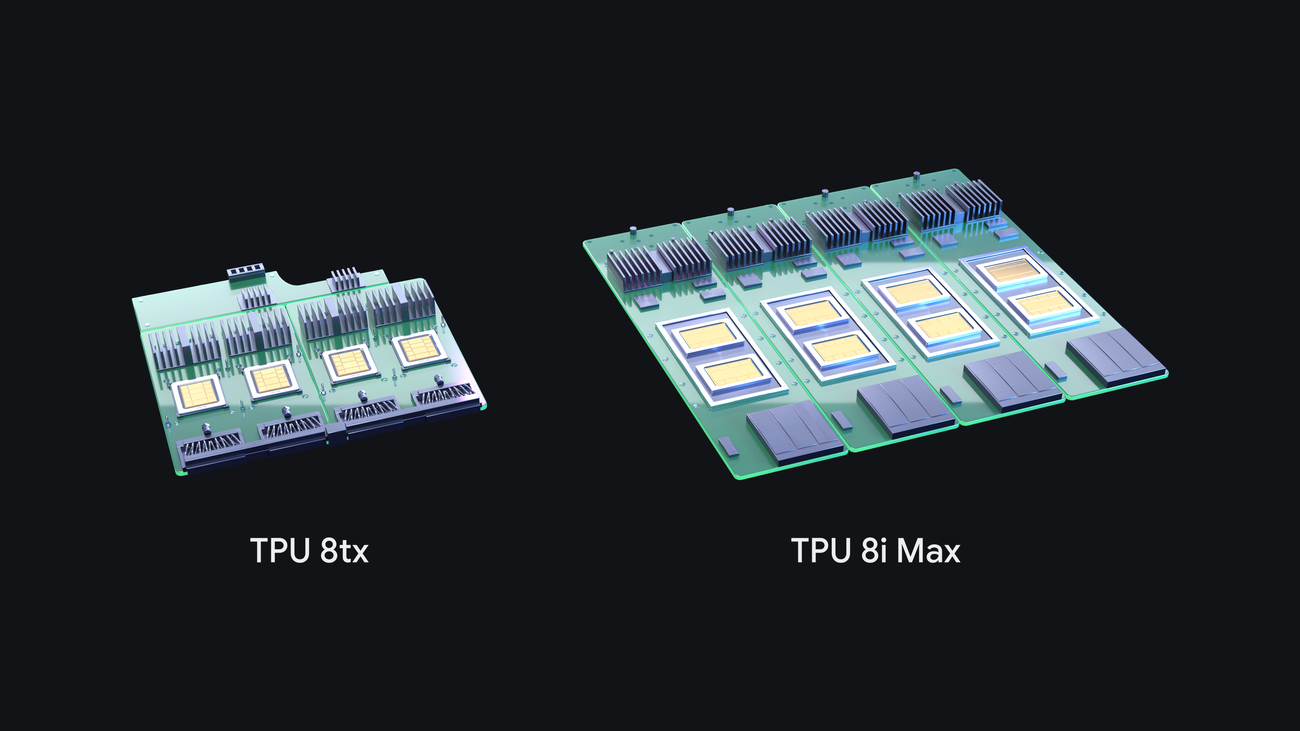
Memory bandwidth can bottleneck agents working across a codebase or video. Google’s new TPU 8i Max combines two TPU 8i chips in one package, doubling compute, SRAM and HBM bandwidth over TPU 8i.
Here's what changed:
- TPU 8i Max fits twice the silicon into the existing rack footprint, increasing compute density per area and per watt.
- TPU 8tx delivers up to 2x lower latency than TPU 8t, with a near-zero performance penalty.
- TPU 8tx protects data and model weights during active processing. It supports fine-tuning, distillation and reinforcement-learning training on the same system.
- TorchTPU runs PyTorch code and Hugging Face models natively on TPUs. vLLM and SGLang have out-of-the-box TPU backends.
- Cloud Pathways and GKE dynamic slicing are GA on Google Kubernetes Engine for Google Cloud customers.
Sources: blog.google
Top News · 273 HN points
Muse Ember is Meta’s small execution model for repetitive agent work, priced at $0.10 input and $0.50 output per million tokens for prompts up to 200,000 input tokens. It is available in Muse Code, including every subscription plan, and the Meta Model API.
Here's what you get:
- Ember scores 37.8% on AutomationBench-AA at maximum reasoning, versus GPT-6 Luna’s 20.2% and Claude Haiku 5.5’s 13.9%, according to Meta.
- Ember scores 40.9% on Terminal-Bench 4.0 at maximum reasoning, versus Claude Haiku 5.5’s 39.2% and GPT-6 Luna’s 16.4%, according to Meta.
- Meta recommends pairing Ember’s repeatable execution with Muse Wonder or Muse Spark for harder planning and orchestration.
One catch: above 200,000 input tokens, pricing rises to $0.30 input and $1.50 output per million tokens.
Try it: Use muse-ember-1.0 with an OpenAI-compatible client at https://api.meta.ai/v1, using a key from dev.meta.ai.
Sources: research.meta.ai · dev.meta.ai
Also in this issue
Signals
- e-means beats Lloyd k-means clustering loss while running 10-45x faster on GPUs · 325 HN points
- AWS ships Nitro Sandboxes to run AI agents in hardware-isolated VMs at no additional charge · 26 HN points
- Cloudflare ships experimental Codex harness for Workers that recovers agent sessions after restarts
- Google’s MaxText adds TPU training for sequences up to 14 million tokens · Reported · googleblog.com
- ByteDance releases Seedream 5.5 with pixel-level preservation of unedited regions across 100 edits
- Data Receipts reports on-demand H100 SXM 80GB at $2.69/hour on RunPod Community versus $12.29/hour on Azure · 168 HN points