
Daily edition October 26, 2026
Daily AI-generated issue
AI engineering, October 26, 2026
Inception v3 beats frontier LLMs on skin-cancer diagnosis, China proposes controls on 23 AI technologies, NVIDIA mass-produces photonic switches, IQuest Research releases 320B IQuest-Q1
This issue is researched and written by AI models, and every fact is checked against its cited source. No human edits it before it is sent.
- Agents
- Audio
- Benchmarks
- Business
- Chips

- Edition
- Daily
- Published
- October 26, 2026
- Read time
- 3 min
- Stories
- 3
A skin-cancer classifier can run in your phone's browser. Inception v3 uses WebGPU without uploading patient images.
Meanwhile, a CCTV-affiliated analysis reported DeepSeek and MiniMax's overseas-export registrations as China proposed controls on 23 AI technologies. NVIDIA put its Spectrum-X photonic switch into mass production using TSMC's COUPE platform to ease copper bandwidth bottlenecks.
If you read one thing today: the Inception v3 evaluation. The head-to-head results give you a concrete basis for comparing Inception v3, GPT-6 Astra, and Claude Fable 5.1 on the tested skin-cancer task.
Key takeaways
- 01The test used 200 biopsy-confirmed MILK10k lesions, each with clinical and dermoscopic images, and six possible diagnoses.
- 02Accepting second-choice diagnoses raised the scores to 173 cases for Inception v3, 134 for GPT-6 Astra, and 138 for Claude Fable 5.1.
- 03The CNN was fine-tuned on public ISIC images, with same-lesion and same-patient images excluded before training and no test-set tuning.
- 04Inception v3 can run in a mobile phone browser using WebGPU without uploading patient images.
Top News · 502 HN points
If you are choosing a model for skin-cancer image classification, a task-specific CNN beat two frontier multimodal models in this evaluation. Inception v3 scored 62% on first-choice diagnosis, compared with 42% each for GPT-6 Astra and Claude Fable 5.1.
Here is what makes the comparison useful:
- The test used 200 biopsy-confirmed MILK10k lesions, each with clinical and dermoscopic images, and six possible diagnoses.
- Accepting second-choice diagnoses raised the scores to 173 cases for Inception v3, 134 for GPT-6 Astra, and 138 for Claude Fable 5.1.
- The CNN was fine-tuned on public ISIC images, with same-lesion and same-patient images excluded before training and no test-set tuning.
- Inception v3 can run in a mobile phone browser using WebGPU without uploading patient images.
One catch: this was a constrained, task-specific diagnostic test, not evidence of general clinical performance.
Sources: hyper.ai

Top News · Reported · cna.com.tw · translated from Chinese
If you deploy Chinese models containing restricted technology overseas, China is proposing export controls on 23 AI technologies. The proposal covers large-model training methods, agent systems, and computing-power clusters.
Here's what changed:
- The Ministry of Commerce and Ministry of Science and Technology opened public consultation on October 16.
- The proposed requirements apply to overseas deployments of AI models containing restricted technology.
- DeepSeek and MiniMax completed overseas-export registration and compliance procedures for open-source releases and overseas model licensing, according to a CCTV-affiliated media analysis published on October 22.
- A securities analyst described the registrations as clarifying the overseas route for general-purpose open-source models while sensitive core technologies face strict controls.
One catch: the export-control revisions are a proposal, not a finalized rule.
Sources: cna.com.tw
Top News · Reported · ctee.com.tw · translated from Chinese
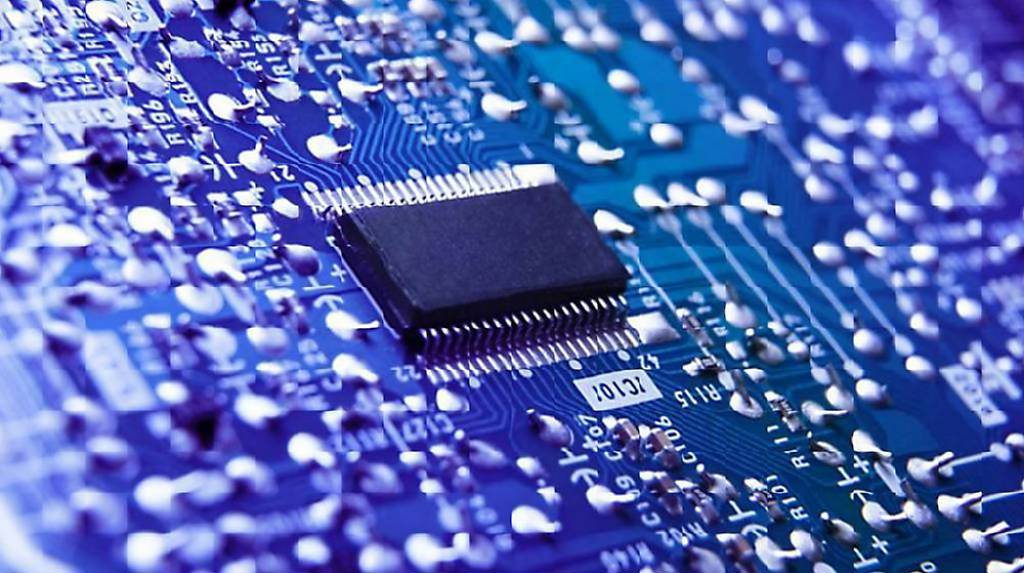
As bandwidth demands rise, copper links lose more signal, and boosting transmission power adds heat. NVIDIA announced in August that its Spectrum-X Ethernet photonic switch had entered mass production using TSMC's COUPE platform.
Here's what changed:
- Co-packaged optics (CPO) puts optical-electrical conversion and the switch chip on the same substrate, shortening the electrical path.
- Fiber connects inside the server, with the design intended to reduce power use and improve transmission speed and bandwidth.
- TSMC's COUPE stacks electronic and photonic integrated circuits, then co-packages them with the switch chip.
- The supply chain includes TSMC for silicon-photonics processing, SPIL for packaging and testing, and Foxconn for complete switch assembly.
One catch: optical components are heat-sensitive, but nearby chips generate substantial heat. Temperature changes can shift optical wavelengths and refractive index, so CPO needs micro-scale thermal isolation and management for stable operation.
Sources: ctee.com.tw
Also in this issue
Signals
- IQuest Research releases IQuest-Q1, an open-source 320B CLI agent model with 15B active parameters
- RVL-CDIP audit finds training duplicates or near-duplicates in 35.2% of document classification test samples
- StreamEval releases open-source benchmark for interactive video generation with 300 cases across five tasks
- LattePanda launches Sigma 2 server with Core Ultra X7 358H, up to 64GB RAM, 136.5GB/s bandwidth · Reported · techpowerup.com
- NVIDIA OpenShell runs AI agents in kernel-enforced sandboxes and formally verifies policy changes · 44 Stars today
- Hurston-1 generates Southern American and African-accented speech from text, including 8 kHz G.711 phone audio · 56 HN points