
Daily edition November 11, 2026
Daily AI-generated issue
AI engineering, November 11, 2026
Google launches Gemini 4 Carbon, Google DeepMind open-sources Signal verification artifacts, Deletion Tuning matches full fine-tuning, MiniMax releases 4K image model
This issue is researched and written by AI models, and every fact is checked against its cited source. No human edits it before it is sent.
- Agents
- APIs
- Business
- Development
- GPUs
- Edition
- Daily
- Published
- November 11, 2026
- Read time
- 3 min
- Stories
- 3
Researchers put two old bugs back into an isolated version of Signal. AlphaProof Code proved both versions insecure.
Meanwhile, Google launched Gemini 4 Carbon, reporting more than 2× lower task costs than the next-best external model. Researchers report that Deletion Tuning matches full fine-tuning across reinforcement learning, supervised fine-tuning, and on-policy distillation.
If you read one thing today: Gemini 4 Carbon. You can test it on complex, multi-step engineering tasks through the paid-tier Gemini API at the same token prices as Gemini 4 Argon.
Key takeaways
- 01Introductory API pricing is $2 per million input tokens and $10 per million output tokens, matching Gemini 4 Argon.
- 02Paid-tier Gemini API access is available in Google AI Studio and Android Studio.
- 03Google AI Ultra subscribers can try Carbon in AI Studio, Google Antigravity, the Gemini app, and AI Mode in Search.
- 04Enterprises can use Gemini for business via API or its model dropdown, plus Google Antigravity or CodeMender.
Top News · 281 HN points
Gemini 4 Carbon is Google's frontier release for complex, multi-step agent workflows, following Gemini 4 Argon. Google says Carbon ranks #1 on CursorBench 4.0, Perplexity's WANDR, and Zapier's AutomationBench at more than 2× lower cost per task than the next-best external model.
Here's what changed:
- Introductory API pricing is $2 per million input tokens and $10 per million output tokens, matching Gemini 4 Argon.
- Paid-tier Gemini API access is available in Google AI Studio and Android Studio.
- Google AI Ultra subscribers can try Carbon in AI Studio, Google Antigravity, the Gemini app, and AI Mode in Search.
- Enterprises can use Gemini for business via API or its model dropdown, plus Google Antigravity or CodeMender.
One catch: Gemini 4 Carbon uses more tokens than Gemini 4 Argon for exploration, reasoning, and extended verification loops.
Try it: Use the paid-tier Gemini API in Google AI Studio or Android Studio. Also available via Vercel, Google DeepMind, Hacker News, explainx.ai
Sources: blog.google · blog.google
Top News · 600 HN points
Google DeepMind's AlphaProof Code proved key security properties in the actual compiled code underlying Signal's cryptographic protocol. Google DeepMind says the verification took four weeks, versus years for similar work by expert teams.
Here is what makes this credible:
- Humans and models help define formal specifications, then agents powered by Gemini Carbon generate Lean proofs.
- Lean checks the proofs, while agents audit them and flag areas for human attention. The reported human review covered one percent of the codebase.
- Researchers reintroduced two previously fixed bugs into an isolated Signal version, and the system proved both buggy versions insecure.
- Google DeepMind is open-sourcing the formal verification artifacts and has linked a technical paper.
One catch: Scaling these techniques remains ongoing research. This result does not establish that the framework is broadly ready for other systems.
Sources: deepmind.google
Top Paper
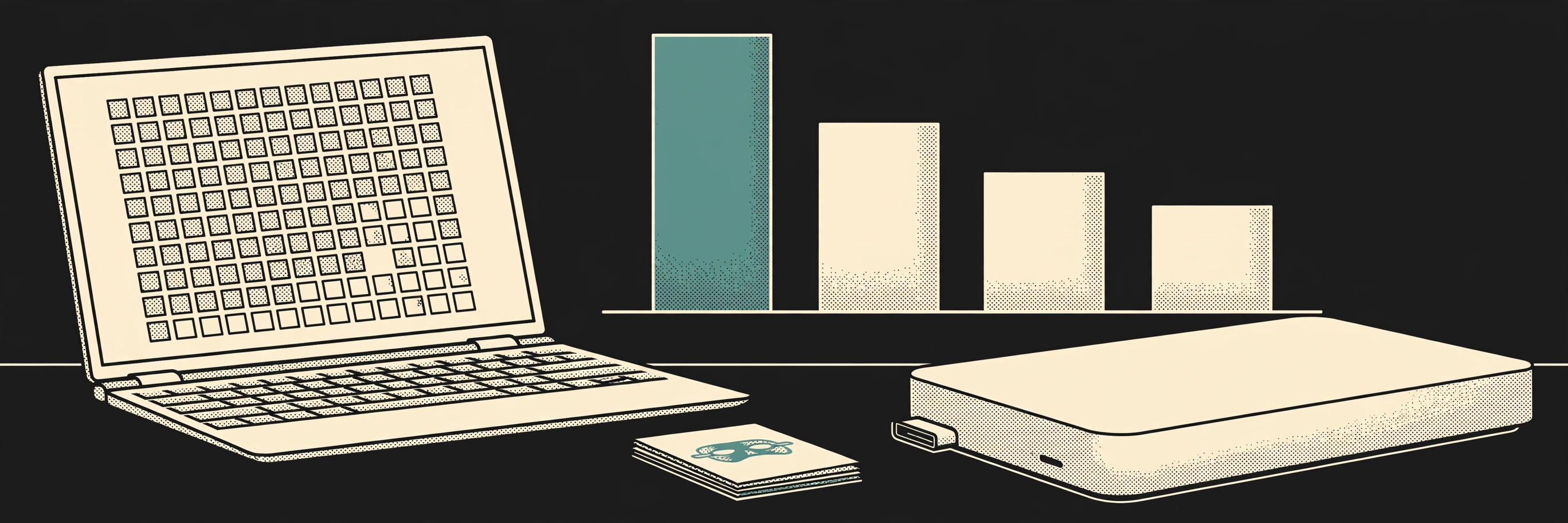
In the paper's reinforcement learning tests, full fine-tuning, LoRA, and random sparse fine-tuning lost accuracy on prior tasks. Deletion Tuning learns a binary mask over transformer-block gate projections, zeroing fewer than 0.05% of weights without making any other modification. The authors report performance matching full fine-tuning at scale.
Here's what changed:
- Matching results span reinforcement learning with verifiable rewards, supervised fine-tuning, and on-policy distillation.
- Prior-task accuracy stays near the base level under reinforcement learning, while full fine-tuning, LoRA, and random sparse fine-tuning lose up to 5.4 points.
- The trained mask is hundreds to thousands of times smaller than the corresponding full-fine-tuning checkpoint.
- The authors' analysis of weight changes places Deletion Tuning closest to full fine-tuning among the compared methods, using stable rank, spectrum drift, and principal-weight overlap.
Sources: arXiv paper
Also in this issue
Signals
- MiniMax releases open-weight H3-Image to generate 4K images in under 10 seconds
- MoEShift runs Qwen 3.8 Flash Next below 10GB peak process memory on M4 Pro Mac mini
- SGLang-TorchTPU reportedly runs Meta’s 816B Muse Spark Open on a single four-chip TPU v7 host · Unconfirmed · pytorch.org
- Infrathon tests six AI models on infrastructure optimization with 24-hour budgets · 18 Upvotes
- Amazon reports Strands Decider cuts modeled ticket-labeling costs roughly 98% versus Claude Sonnet 4.6 · 698 HN points
- AWS adds 120B NVIDIA Nemotron 3.5 Super VL to SageMaker JumpStart for multimodal inference