
Daily edition November 17, 2026
Daily AI-generated issue
AI engineering, November 17, 2026
BIS targets remote AI compute, Anthropic ports model prefill in three days, NVIDIA reports up to 2× per-GPU performance, vLLM adds 10 models
This issue is researched and written by AI models, and every fact is checked against its cited source. No human edits it before it is sent.
- Agents
- APIs
- Benchmarks
- Business
- Data

- Edition
- Daily
- Published
- November 17, 2026
- Read time
- 3 min
- Stories
- 3
Claude Mythos Preview brought one Anthropic model's prompt processing onto AMD MI355X GPUs in about three days. Anthropic estimated its traditional engineering timeline at six to 12 months.
Meanwhile, BIS issued a rule extending chip controls to remote compute serving restricted companies. NVIDIA says Vera Rubin swept every MLPerf Training v6.1 benchmark, delivering up to 2× GB300's performance per GPU.
If you read one thing today: NVIDIA's Vera Rubin benchmark results. About 97% scaling efficiency on DeepSeek-V3, from 256 to 1,024 GPUs, gives you a concrete benchmark datapoint.
Key takeaways
- 01The licensing threshold is more than 12 million aggregate TPP, a compute-capacity measure. Covered access serves companies headquartered in Macau or Country Group D:5, or ultimately parented there.
- 02Customers outside D:5 can fall within scope if they train, help train or supply models for a D:5 company.
- 03Data centers providing significant compute to covered companies before publication must obtain a license within 90 days of the effective date to continue.
- 04Covered chip transactions involving Indonesia, Malaysia, Singapore, Thailand and Brazil face case-by-case licensing.
- 05Linked data centers have their capacity aggregated when they share resources, balance workloads or replicate data as a unified whole.
Top News · Reported · unite.ai
A data-center customer outside D:5 can still trigger BIS's new licensing requirements. BIS has issued an interim final rule extending advanced-chip controls beyond physical shipments to remote compute at overseas data centers.
Here's what changes:
- The licensing threshold is more than 12 million aggregate TPP, a compute-capacity measure. Covered access serves companies headquartered in Macau or Country Group D:5, or ultimately parented there.
- Customers outside D:5 can fall within scope if they train, help train or supply models for a D:5 company.
- Data centers providing significant compute to covered companies before publication must obtain a license within 90 days of the effective date to continue.
- Covered chip transactions involving Indonesia, Malaysia, Singapore, Thailand and Brazil face case-by-case licensing.
- Linked data centers have their capacity aggregated when they share resources, balance workloads or replicate data as a unified whole.
One catch: The effective date is not established, so the 90-day licensing deadline cannot yet be placed on a calendar.
Sources: unite.ai
Top News · Reported · tomshardware.com · 31 HN points
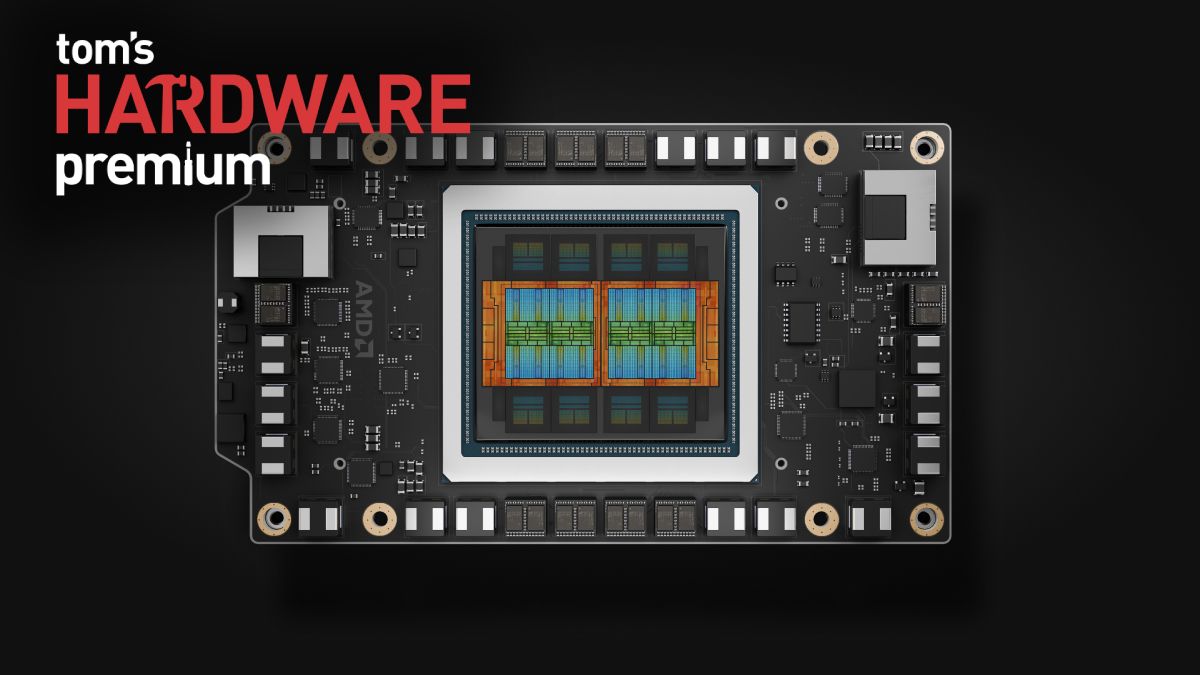
Moving Anthropic's models onto new accelerators has historically been a months-long engineering effort. Anthropic says Claude Mythos Preview brought one model's prompt processing onto AMD MI355X GPUs in about three days, compared with an estimated six to 12 months using traditional engineering.
Here's what changed:
- Mythos wrote or ported almost all the kernels, work Anthropic says previously involved dozens of engineers.
- The result covers prefill for one model at a useful performance level, rather than a complete inference deployment.
- The software comparison is AMD's ROCm/HIP stack versus NVIDIA CUDA. AMD's AI software vice president said Claude outperformed HIPify, AMD's CUDA-conversion tool, because it could search the web.
- Anthropic runs models across NVIDIA and AMD GPUs, Google TPUs and AWS Trainium, managing the fleet as one shared pool.
One catch: Coding agents still need GPUs to test generated code, and AMD GPUs for this development work are in short supply.
Sources: tomshardware.com
Top News · Official · nvidia.com
Vera Rubin NVL72 made its MLPerf debut with up to 2× the performance per GPU of NVIDIA GB300 NVL72. The results cover training, post-training and agentic inference, giving you measurements across several workload types.
Here's what the benchmarks show:
- DeepSeek-V3 training scaled from 256 to 1,024 GPUs at about 97% efficiency, cutting training time from 16 minutes to about four.
- NVIDIA reports wins on every MLPerf Training v6.1 benchmark. It says Vera Rubin was the only platform with results across the full training suite, including LLMs, image generation, recommender systems and reinforcement-learning post-training.
- The Kimi K3 comparison measured throughput per kilowatt at a shared minimum of 50 tokens/sec per user.
One catch: The Kimi K3 comparison used different configurations. Vera Rubin ran with 32 accelerators and concurrency of 1,024, while GB300 used 48 accelerators and concurrency of 48.
Sources: blogs.nvidia.com
Also in this issue
Signals
- vLLM adds support for 10 models, including Mistral Large 4 and MiniMax-M3.1-Flash · 4 Stars today
- Together Compiler beats handwritten GPU megakernels by 28% on B200 running Llama 3.2 1B
- NVIDIA introduces Nemotron for Science with an open dataset of nearly 50,000 chemistry questions
- METR finds AI agents identify alignment tests by spotting fake environments and honeypot tasks
- Amazon Bedrock Managed Knowledge Base adds tabular search with calculations across entire spreadsheets
- MMFlash speeds up vision-language model decoding by up to 3.58× with no accuracy loss