
Daily edition October 21, 2026
Daily AI-generated issue
AI engineering, October 21, 2026
Google opens Gemini 4 Argon globally, Mistral ships Voxtral 3, Google and Meta introduce TorchTPU, vLLM releases Humming kernels
This issue is researched and written by AI models, and every fact is checked against its cited source. No human edits it before it is sent.
- Agents
- APIs
- Audio
- Benchmarks
- Business

- Edition
- Daily
- Published
- October 21, 2026
- Read time
- 3 min
- Stories
- 3
The 5,000 most-downloaded Hugging Face models ran on Google's TPUs out of the box. Google and Meta's TorchTPU supplies the native PyTorch backend.
Meanwhile, Google has made Gemini 4 Argon globally available through the paid Gemini API tier in AI Studio and Android Studio. Mistral offers Voxtral 3 voice agents from $0.04 per minute and says Small transcription outperforms Whisper, Scribe v2, and Gemini 3.5 Transcribe.
If you read one thing today: Gemini 4 Argon. Use its API prices and 95% cached-input discount to estimate the cost of an integration.
Key takeaways
- 01API pricing is $2 per million input tokens and $10 per million output tokens. Cached input receives a 95% discount.
- 02Google AI Ultra subscribers can use Argon in Antigravity and AI Studio. Gemini app and AI Mode in Search access is for Google AI Ultra or Pro subscribers.
- 03Enterprise access is through Gemini for business, the API, and Google Antigravity.
Top News · 21 HN points
If you want to put Gemini 4 Argon into an application, the paid Gemini API tier is open globally in AI Studio and Android Studio. Google's latest frontier model targets complex, multi-step work in coding, finance, legal, cybersecurity, and science.
Here's what you get:
- API pricing is $2 per million input tokens and $10 per million output tokens. Cached input receives a 95% discount.
- Google AI Ultra subscribers can use Argon in Antigravity and AI Studio. Gemini app and AI Mode in Search access is for Google AI Ultra or Pro subscribers.
- Enterprise access is through Gemini for business, the API, and Google Antigravity.
One catch: the Gemini API's 1 million-token limit is shared by input and output. Longer work uses a continuation protocol that requires setup.
Try it: Use the Gemini API in AI Studio or Android Studio on the paid tier.
Sources: blog.google
Top News · 574 HN points
Voxtral 3 combines transcription, speech generation, and a voice-agent SDK. Its voice-agent API starts at $0.04 per minute. Mistral says the Small transcription model outperforms Whisper, Scribe v2, and Gemini 3.5 Transcribe.
Here's what you can build with it:
- The LiveKit-based SDK streams transcription, reasoning, tool calls, and speech generation rather than waiting for each stage to finish. Callers can interrupt the agent.
- SIP connects phone calls, while WebRTC supports browser and app experiences. Agents can use function calling, web search, and retrieval over your systems.
- Batch transcription costs $0.0035 per minute for the 4B Mini model and $0.0040 for Small. Realtime Mini transcription costs $0.008 per minute.
One catch: the $0.04-per-minute agent price requires Mistral Small 4 for reasoning. Using another reasoning model costs $0.08 per minute.
Try it: Use the Mistral API or Studio playgrounds for voice agents, transcription, speech generation, and voice cloning.
Sources: mistral.ai
Top News · Reported · pytorch.org
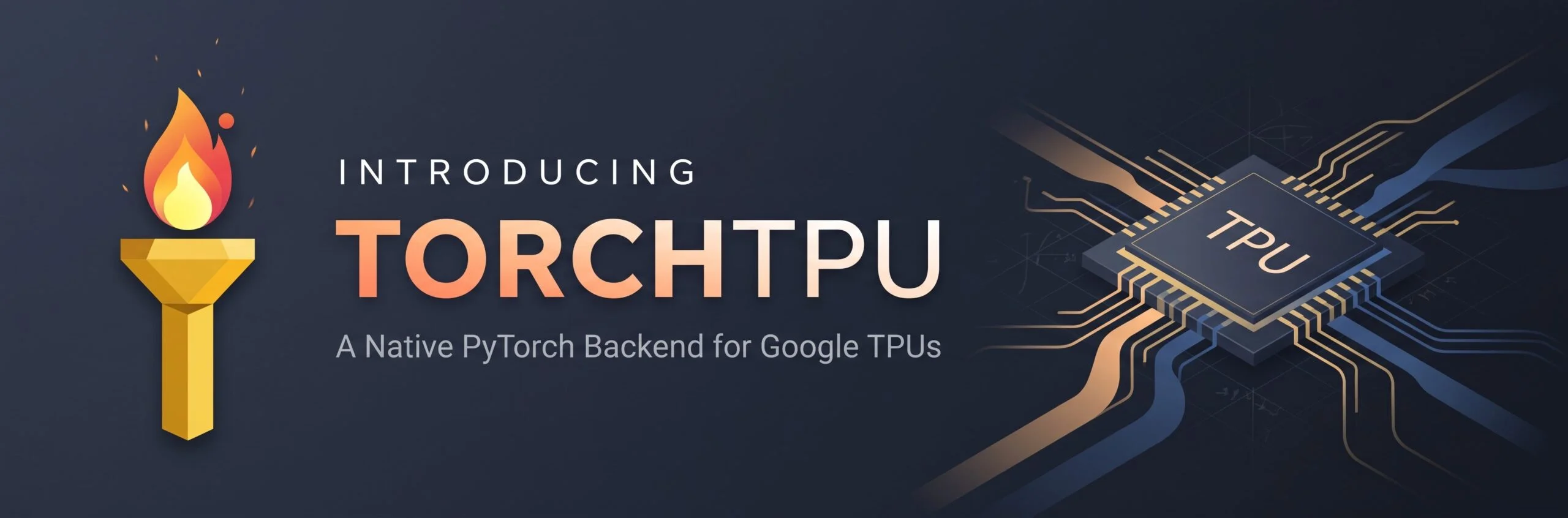
TorchTPU is Google and Meta's open-source backend for running PyTorch natively on Google TPUs. Its DeferAndFuse mode can run at least 50% faster than Strict Eager and reduce peak HBM usage through fusion.
Here's what you can use:
- Changing
model.to("cuda")tomodel.to("tpu")is the basic migration path. torch.compilegets a native TPU backend alongside eager execution, with support for approximately 450 Aten ops.- The team validated out-of-the-box execution on the 5,000 most-downloaded Hugging Face models, spanning language, audio, vision, and text-encoder/search categories.
- Validation also covers DTensor sharding, multi-host inference with vLLM and SGLang, and TorchTitan training with Ray orchestration.
One catch: default Skinny Collectives can impose a 30-40% end-to-end performance penalty because XLA cannot overlap computation and communication.
Try it: On a TPU machine with the TorchTPU wheel installed, run compiled_model = torch.compile(model, backend="tpu").
Sources: pytorch.org
Also in this issue
Signals
- vLLM releases Humming quantized inference kernels supporting NVIDIA GPUs from Turing onward
- OpenAI adds 12-hour API prompt caching with writes costing 2.5x input token prices
- Meta’s Muse Spark Open hits 25.4% on Harvey’s Legal Agent Benchmark, nearly 4x Claude Opus 5
- Amazon Bedrock adds schema-compliant JSON outputs for all Anthropic Claude models
- Cloudflare’s security-audit skill runs six-phase code audits with independently verified findings · 92 Stars today
- POPE audit finds token lookup shifts LLaVA-1.5-7B adversarial F1 by 6.13 points · 3 Upvotes