
Daily edition October 4, 2026
Daily AI-generated issue
AI engineering, October 4, 2026
OpenAI launches Dot agent for Pro users, Aleph Alpha releases open-weight Kolibri, Apple announces macOS Full Disk Access changes, LiteLLM cuts time to first byte 94%
This issue is researched and written by AI models, and every fact is checked against its cited source. No human edits it before it is sent.
- Agents
- APIs
- Audio
- Benchmarks
- Business
- Edition
- Daily
- Published
- October 4, 2026
- Read time
- 4 min
- Stories
- 3
Kolibri would rather say "I don't know" than guess. On Omniscience, Aleph Alpha's new model admitted uncertainty or gave a partial answer 44% of the time, versus 11.1% for Qwen3.5 35B-A3B.
Meanwhile, OpenAI's Dot is a cloud agent for complex software tasks, available only to $100-per-month Pro subscribers. Apple announced changes to macOS Full Disk Access permissions to address developers' use of that access in ways that could expose sensitive user data.
If you read one thing today: Aleph Alpha's Kolibri. It ships Apache 2.0 weights you can self-host on two 80 GB GPUs, and it beats Qwen3.5 35B-A3B on overall English and German scores.
Key takeaways
- 01Dot is available exclusively to OpenAI Pro subscribers on the $100-per-month tier.
- 02You talk to it in a conversational window and watch its progress in a separate pane tied to a persistent virtual machine.
- 03It can drive desktop applications directly, including Blender and GIMP.
- 04A dedicated desktop app gives it access to your local system.
- 05You can guide it by voice call while a task runs.
Top News
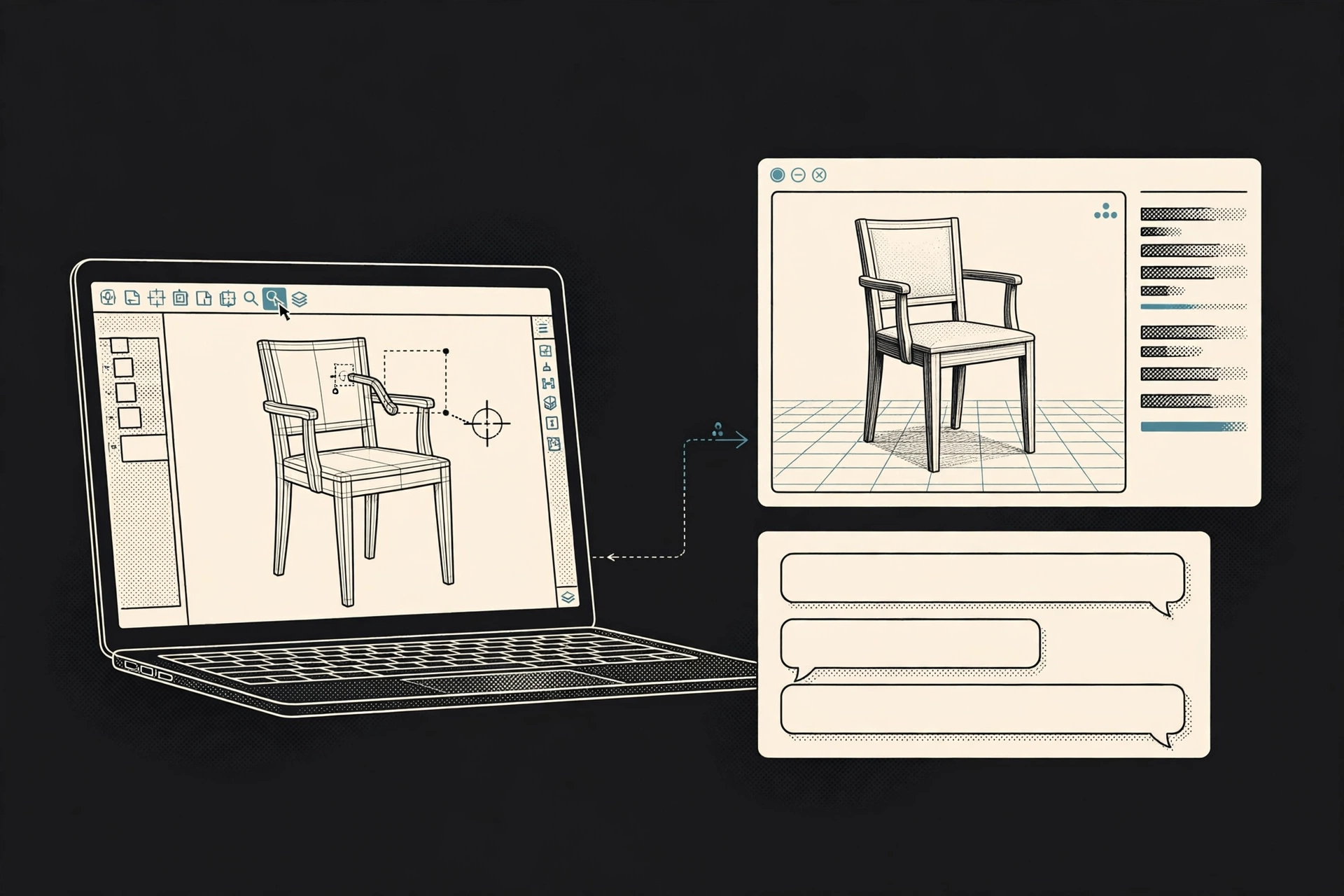
OpenAI's new Dot is a cloud-based agent built to execute complex, multi-step software tasks. Think of it as a digital coworker for professional workflows, not a chat assistant.
Here's what changed:
- Dot is available exclusively to OpenAI Pro subscribers on the $100-per-month tier.
- You talk to it in a conversational window and watch its progress in a separate pane tied to a persistent virtual machine.
- It can drive desktop applications directly, including Blender and GIMP.
- A dedicated desktop app gives it access to your local system.
- You can guide it by voice call while a task runs.
One catch: consumer websites cause friction. Bot detection, security checks and payment gateways lack native integration, so routine personal tasks may need you to step into the browser manually.
Try it: subscribe to OpenAI Pro at the $100-per-month tier, and install Dot's desktop app for local-system access.
Sources: hyper.ai

Top News · 410 HN points
Need a strong German and English model you can run on your own hardware? Aleph Alpha launched Kolibri 1 as an open-weight model trained from scratch in Germany and Finland. In Aleph Alpha's evaluation, it scored 75.5 in English and 70.8 in German overall, ahead of Qwen3.5 35B-A3B at 74.7 and 69.8.
Here's what changed:
- Its UniBPE tokenizer uses 11.2% fewer tokens on German text than GPT-5's tokenizer, in Aleph Alpha's measurement.
- On AIME 2025 it hit 96.9 in English and 87.5 in German, against 89.6 and 84.4 for the closest model with about 3B active parameters.
- It is an MoE with 78.1B total and 3.46B active parameters per token.
- Context is 262,144 tokens natively, validated up to 1,048,576 tokens.
- On Omniscience, it admitted uncertainty or gave a partial answer 44% of the time.
One catch: coding and multi-turn tool calling trail rivals. It scored 66.4 on SWE-bench Verified versus 73.8 for Qwen3.6 35B-A3B.
Try it: pip install 'aleph-alpha-inference>=1', then vllm serve Aleph-Alpha/Kolibri-1 (Apache 2.0 weights on Hugging Face, about 78 GB of GPU memory).
Top News
Meta says Muse needs Full Disk Access for its Messages integration, and that one permission opens a lot. Apple announced changes to macOS Full Disk Access permissions to address developers using it in ways that could expose sensitive user data. The timing and affected macOS versions were not given.
Here's what changed:
- Apple warned that Full Disk Access can expose files, mail, messages and browsing history, and can affect the privacy of people messaging the user.
- Meta's CTO said reading Apple Messages in its Muse agent requires both Full Disk Access and enabling Muse's opt-in Messages connector.
- A macOS security expert disputed that, saying Full Disk Access alone makes non-root files readable.
- A disclosed Muse configuration could let any app or code on a Mac take control of the assistant, including through ClickFix attacks.
- Amazon blocked Muse from its platform.
One catch: Apple did not name Meta, Muse or any developer, so the link to the Muse controversy is not established.
Why care? If your agent relies on Full Disk Access, watch for Apple's announced permission changes.
Sources: arstechnica.com
Also in this issue
Signals
- Ollama adds Cloudflare's open-source Clef decision models (27B and 9B) with image inputs · 4 Stars today
- LiteLLM cuts time to first byte 94% on 440k-token prompts, from 553 ms to 35 ms
- PyTorch's Helion beats CUTLASS and DeepGEMM in vLLM on Hopper, over 10% gains on some workloads
- DeepSeek ports DeepGEMM to Huawei Ascend 950 with BF16, FP8 and FP4 GEMM support
- Agent Reach CLI lets AI agents read Twitter, Reddit, YouTube and Bilibili with zero API fees · 59 Stars today
- Claude Sonnet 5.5 (Max) ranks #3 on Agent Arena, costs 73% more per task than Opus 5.5 (High)